
A leveraged ETF position is falling, and adding bonds or gold sounds like an easy solution. It may help in some market conditions. But the most direct way to reduce the position's contribution to portfolio risk is usually to reduce its size or leverage first.
The question is not simply which asset rises when stocks fall. Ask what loss you need to withstand, when you need the money and whether the proposed protection works in that specific situation.
Start with exposure, not the number of holdings
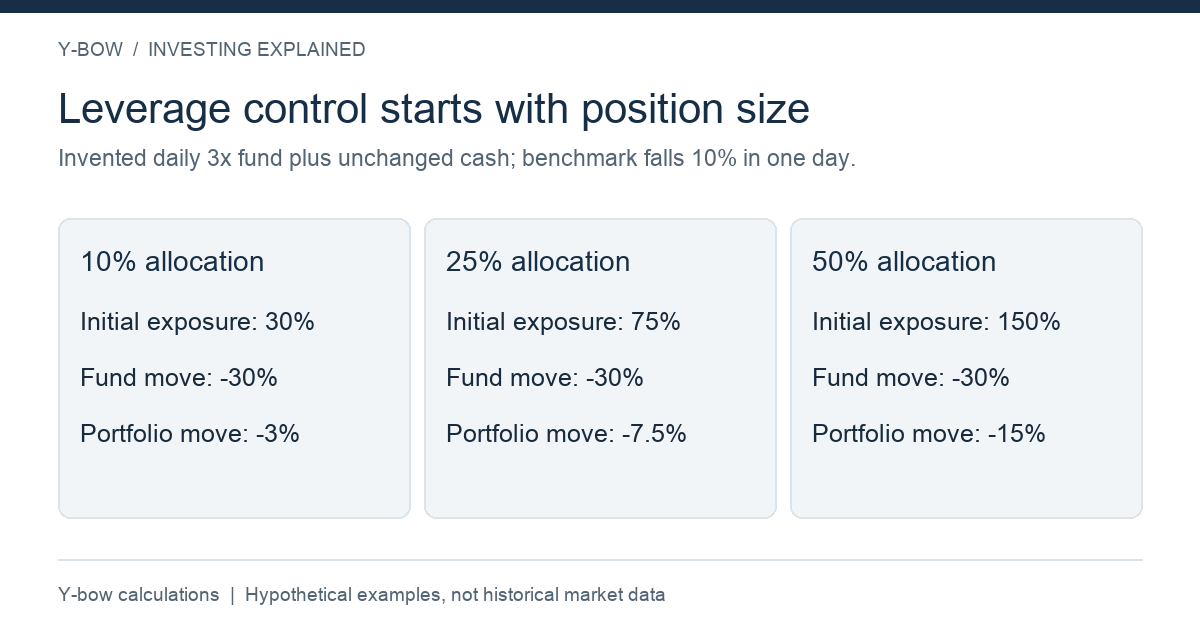
For a simplified one-day calculation, let a portfolio hold a daily 3x equity fund and cash. Assume the fund meets its target exactly and cash is unchanged. This ignores fees, financing, tracking differences and extreme-market limitations.
| Leveraged fund allocation | Approximate initial equity exposure | Portfolio change if the benchmark falls 10% that day |
|---|---|---|
| 10% | 30% | −3% |
| 25% | 75% | −7.5% |
| 50% | 150% | −15% |
These exposures are not forecasts for a month or a year. Daily-reset compounding changes the result over multiple days. Nevertheless, the table shows why a relatively small allocation can dominate the emotional experience of a portfolio.
An unleveraged fund holding similar shares does not offset the leveraged position. It can reduce the average leverage compared with putting everything in the leveraged fund, but both holdings remain exposed to the same market direction.
Cash, bonds and gold solve different problems
Cash can cover spending without requiring the sale of falling investments. Its purchasing power can decline with inflation, and protections depend on the account and jurisdiction. Its practical value is liquidity when you need it, not a promise to maximize long-term returns.
Bonds require more detail than the word “bonds.” Duration, credit risk, inflation and currency exposure matter. A long-duration bond fund can fall when yields rise, while lower-quality debt may weaken alongside equities. A bond allocation is not guaranteed to rise during every stock-market decline.
Gold has different economic drivers from corporate earnings, but its price is volatile and it does not provide a contractual income stream. Gold-mining shares add company and equity-market risks. Our gold investment comparison compares these different exposures.
A hedge needs a job and a cost budget
Define the risk first: immediate living expenses, a specific stock exposure, a currency mismatch or an unacceptable portfolio drawdown. Then compare a protection strategy with simply owning less of the risky asset.
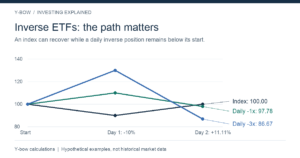
Options can have premiums and expiration dates. Inverse funds have daily-reset effects. A position that offsets a one-day move may behave very differently over a longer period. Read our inverse ETF guide before treating a daily inverse fund as permanent insurance.
Suppose a hypothetical portfolio has $20,000 in a daily 3x fund and $80,000 in cash. Its approximate initial benchmark exposure is $60,000. Compare this with $60,000 in an unleveraged fund and $40,000 in cash. Initial directional exposure may look similar, but daily compounding, costs and cash available for emergencies differ. They are not interchangeable portfolios.
Write a rebalancing rule before a stressful week
A rule might define review dates, target allocations and tolerances. It should consider taxes and trading costs rather than assuming every rebalance is free. Selling after a loss is not automatically irrational if the original allocation was unaffordable or circumstances changed.
At the same time, a rule rewritten after every alarming headline is not much of a rule. Stress-test both a market decline and a personal income interruption. If your plan only works when your salary and asset prices stay strong together, it needs another look.
The Japanese risk-management article focuses on leveraged Nasdaq investing. This adaptation puts position size, liquidity and the specific purpose of a hedge ahead of a universal stock/bond/gold recipe.
Sources and review date
Reviewed October 14, 2026. See the SEC's asset allocation guidance and leveraged and inverse ETF bulletin. All numbers above are hypothetical calculations by Y-bow. They are not observed fund returns or an individualized allocation recommendation.





Comments