
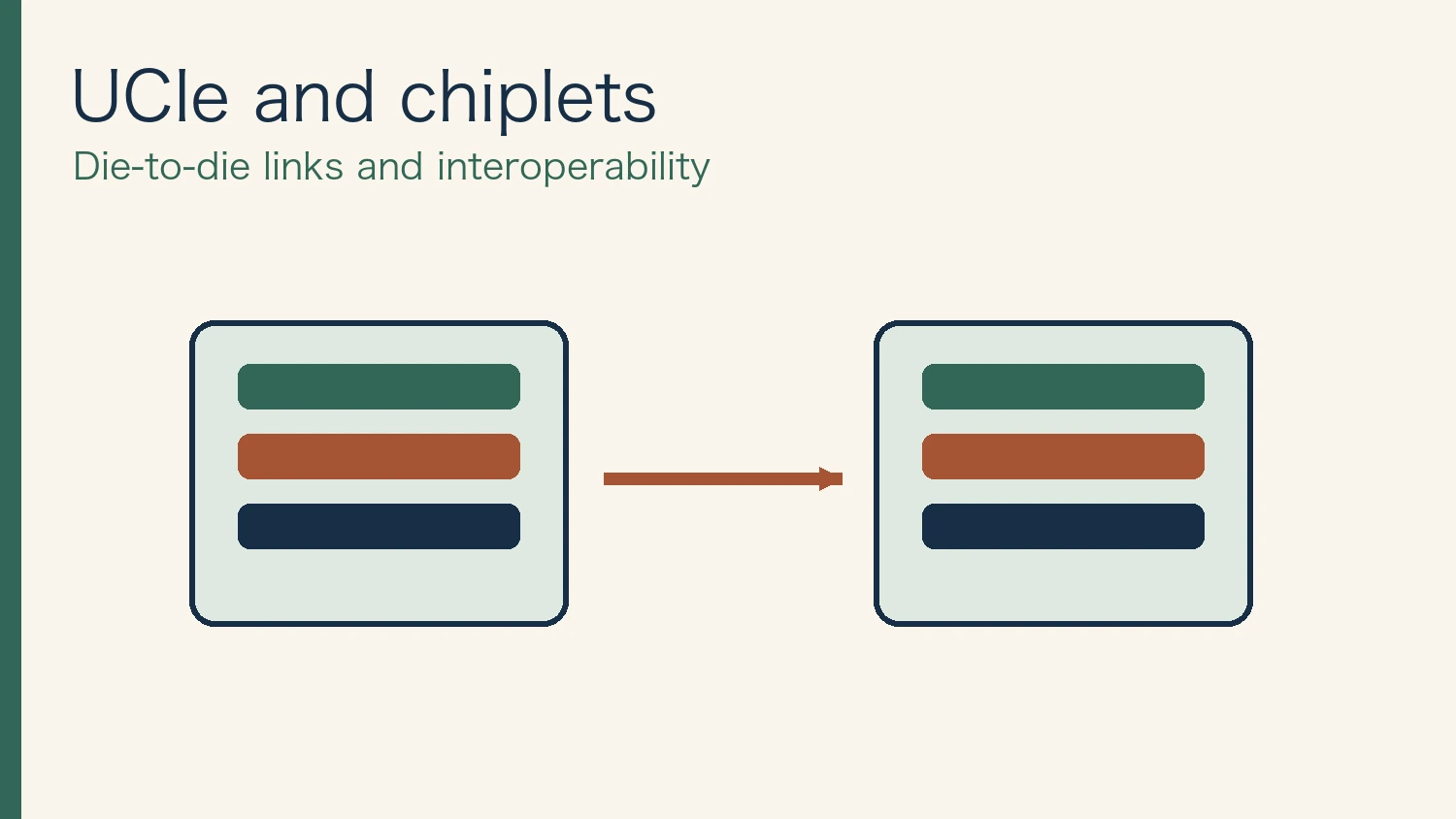
Chiplets let a designer split compute, memory control and I/O across dies. Putting two dies in the same package creates a physical opportunity to communicate. An interconnect specification tells them how to do it. UCIe supplies a common specification, while each product still has to implement and validate a particular combination.
In August 2026 AMD announced plans for UCIe 1.1 connectivity in selected Versal adaptive SoCs. The consortium also publishes the later UCIe 3.0 specification. The two facts illustrate an important distinction: an announced product can support an earlier specification and a defined set of operating modes.
Why split a chip into dies?
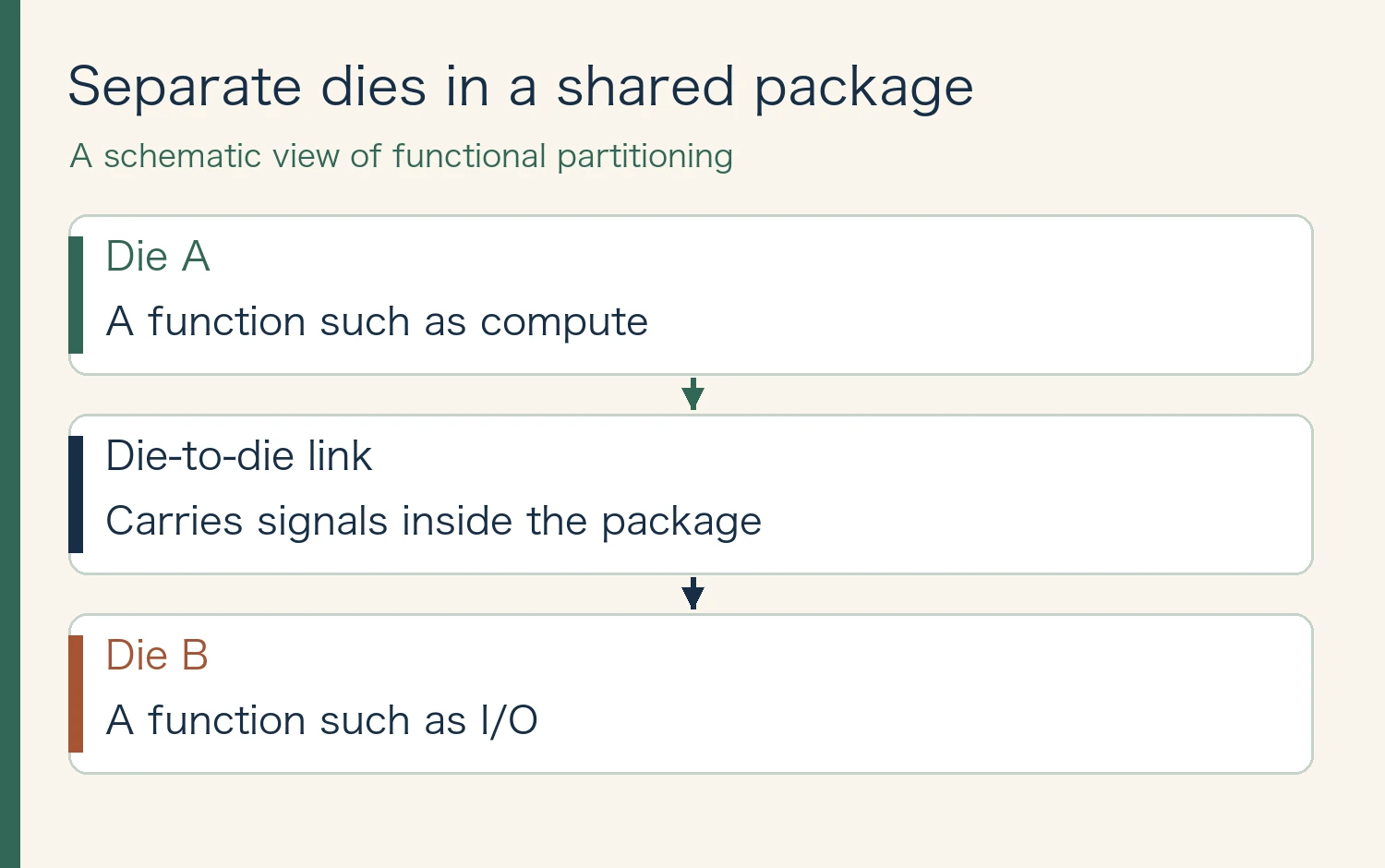
A designer can use different manufacturing processes for different functions or reuse a die in more than one product. Splitting a chip also introduces a connection that must carry signals across the package. That path affects bandwidth, latency, power and how the assembled device can be tested.
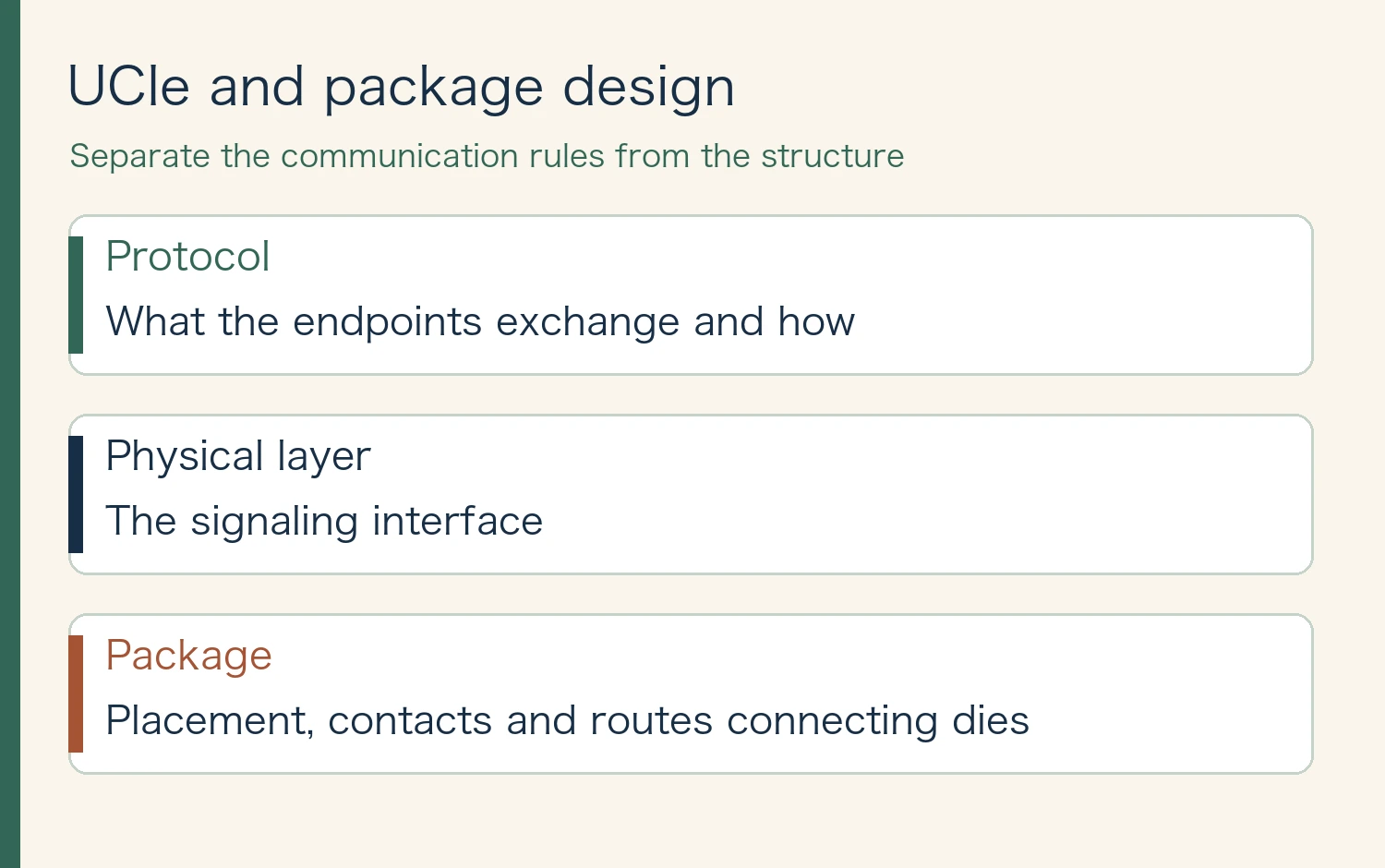
A substrate or bridge provides a physical route. An interconnect specification describes how compatible endpoints exchange signals over such a route. Separate the package structure from the communication rules before comparing technology announcements.
Advertisement
What UCIe standardizes
The Universal Chiplet Interconnect Express specification covers package-level die-to-die I/O, protocols and software-related layers. It can make use of established PCIe and CXL protocols. This does not turn the connection into a motherboard expansion slot. Start by checking the location, the supported mode and both endpoints.
A feature in the latest specification is not automatically available on every part carrying the UCIe name. Look for the implemented version, package class, signaling capabilities and supported protocol modes. Distinguish a headline signaling rate from the useful application throughput a system can deliver.
What remains to be qualified
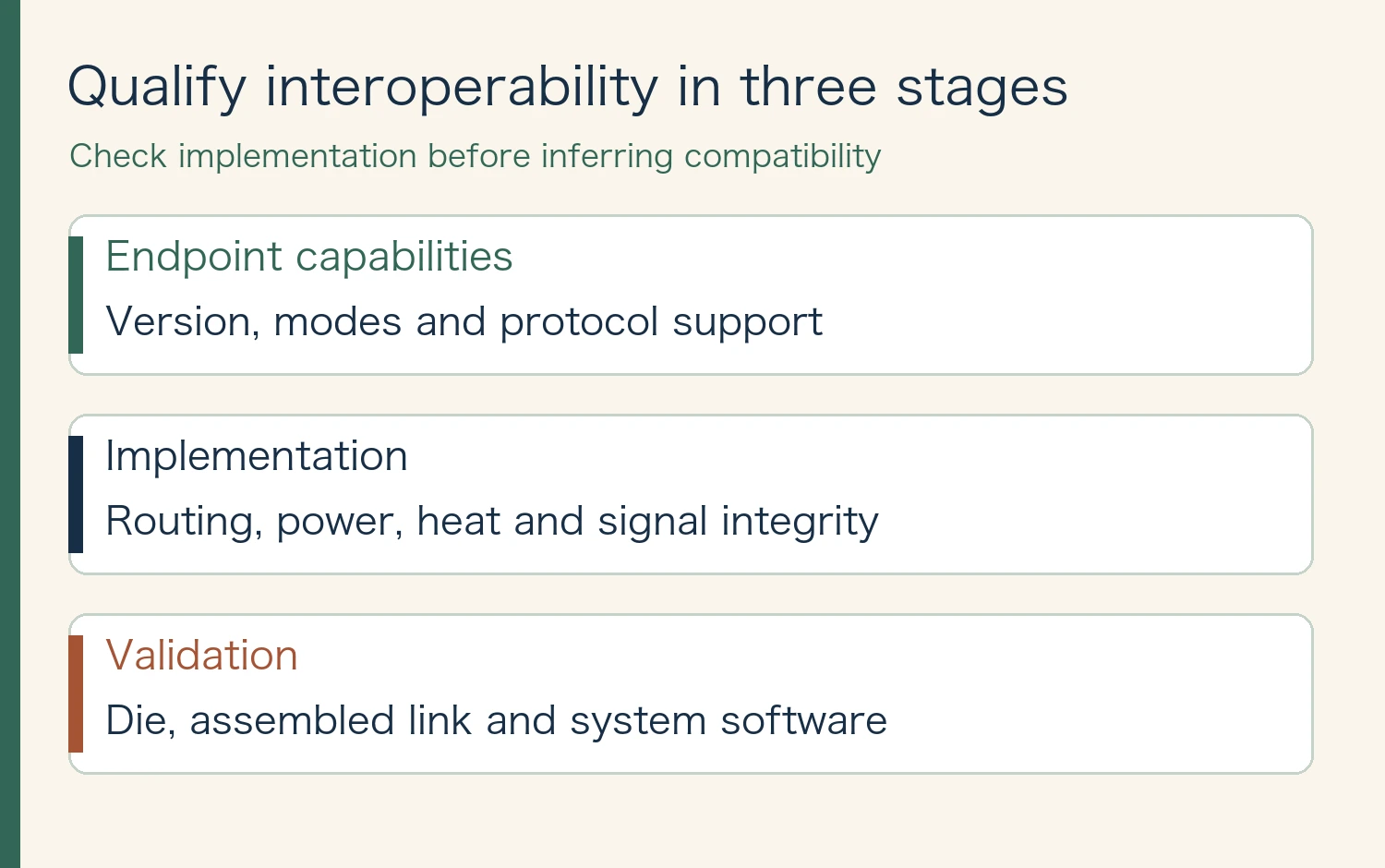
The components have to fit the package, meet power and thermal budgets and maintain signal quality under the stated conditions. Die-level screening, testing of the assembled link and validation with the intended software answer different questions. A statement of interoperability is most useful when it identifies both parts and the conditions under which they were tested.
← Swipe to view the full table →
| Item | What to verify |
|---|---|
| Endpoint capabilities | Version, modes and protocol support |
| Implementation | Routing, power, heat and signal integrity |
| Validation | Die, assembled link and system software |
Advertisement
How UCIe differs from CoWoS
CoWoS is a family of advanced packaging technologies from TSMC. UCIe addresses communication between dies. A useful reading habit is to keep two columns: the physical structure that brings the components together, and the protocol and signaling that let them exchange information.
Can any two UCIe chiplets work together?
That depends on the implemented versions and modes, package compatibility and system-level qualification. Look for vendor documentation for the actual combination rather than treating support for a standard as a blanket guarantee.
Related reading: The AI memory supply chain
Sources and review date
Sources reviewed November 12, 2026. Figures and the cover were created for this article. Dated disclosures and illustrative examples are labeled in the figures.







Comments