

A Russell 2000 reconstitution changes the benchmark that the iShares Russell 2000 ETF (IWM) seeks to track. FTSE Russell measures companies on a specified date, publishes preliminary changes, and later implements the new index. The dates answer different questions. A name can appear on a preliminary list well before an index fund needs to reflect the final benchmark.
When is the December 2026 Russell reconstitution?
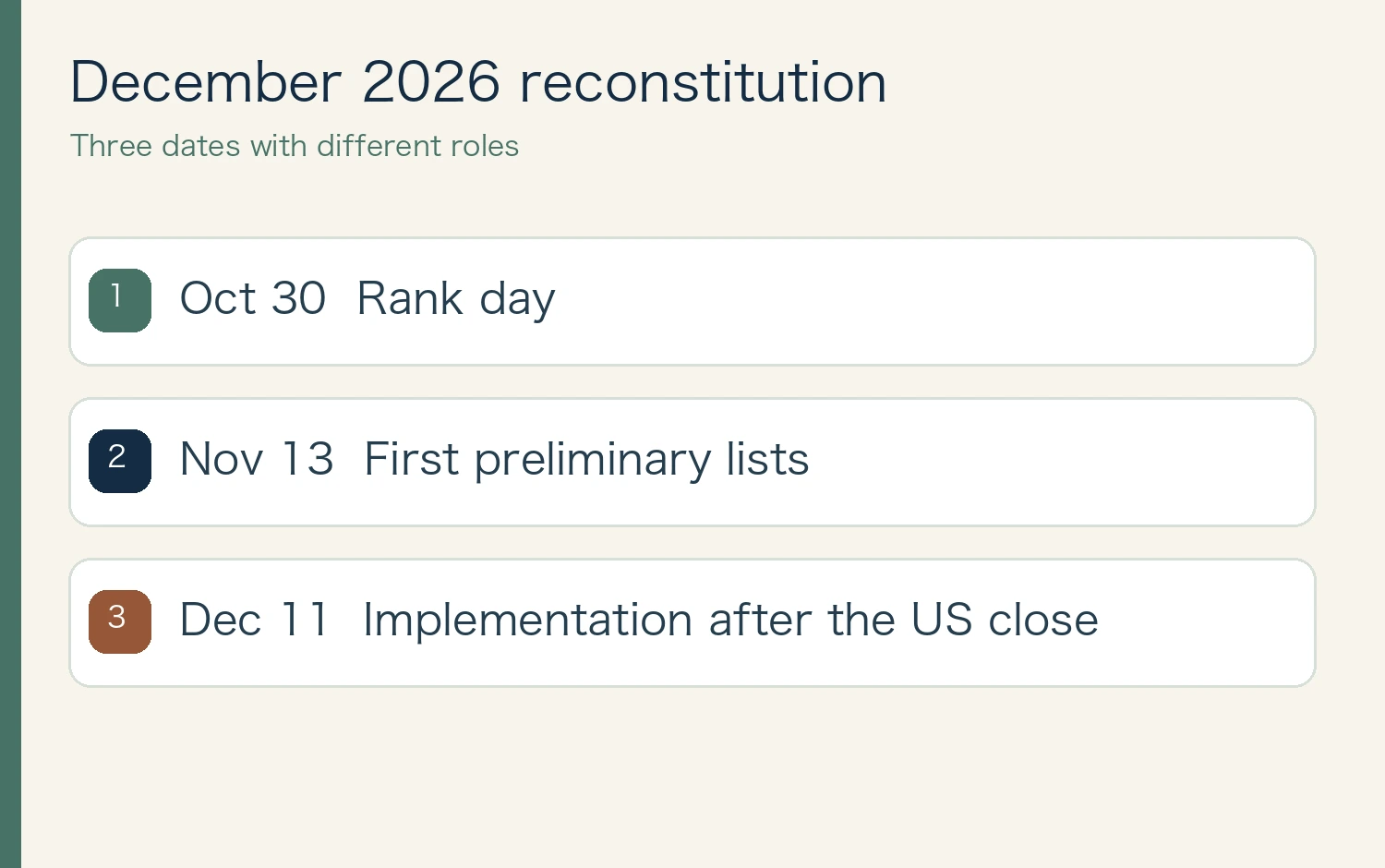
The updated FTSE Russell calendar gives October 30 as rank day, November 13 as the first preliminary list date, and December 11 after the US market close for implementation. Earlier materials pointed to November implementation. Use the newest official schedule for the relevant year and check whether the timestamp is in US market time. Corporate actions and corrections can change a preliminary list before implementation.
How companies move between the Russell 1000 and 2000
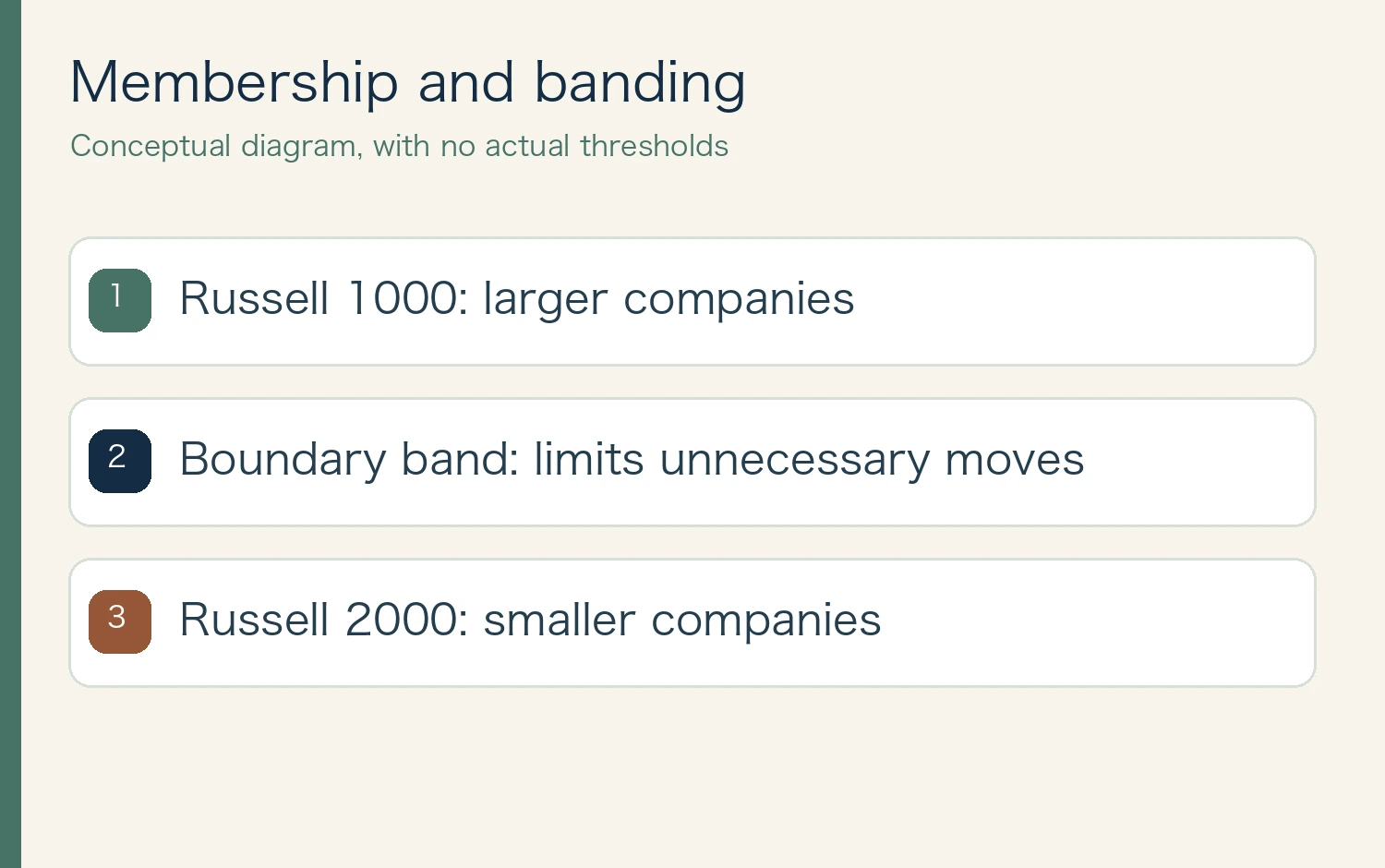
The Russell 2000 is the smaller-company segment of the broader Russell 3000 universe. FTSE Russell's rules use banding around the Russell 1000/2000 boundary to limit unnecessary migration by existing members. Index eligibility, ranking by market capitalization and float-adjusted index weights are different steps. A screen of company market caps can help you understand the direction of a change, but it is an incomplete model of the official list.
A company moving down from the Russell 1000 can enter the Russell 2000 with a relatively large small-cap weight. A company moving up can leave the small-cap index while remaining in the broader Russell universe. Read the membership change and the new target weight separately.
Advertisement
Why IWM may trade near the close
Index managers have an incentive to align their portfolios with the benchmark transition price, which can concentrate activity near the closing auction. Actual orders depend on positions already held, fund flows, in-kind creations or redemptions, and execution decisions. Inclusion alone does not give the direction of a stock's closing move or a profitable trade.
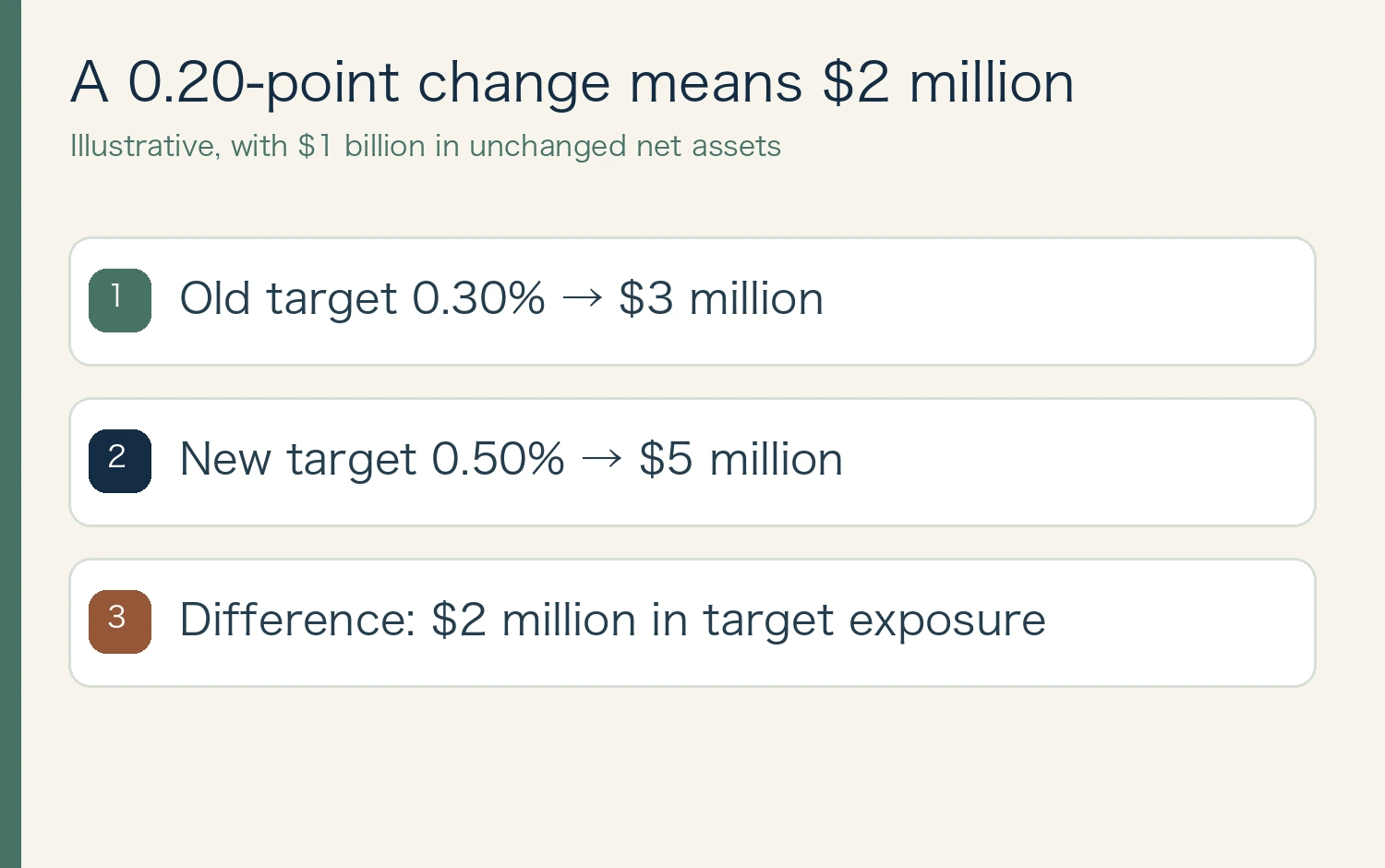
Take a hypothetical fund with $1 billion of unchanged net assets. A target weight rising from 0.30% to 0.50% changes the target dollar exposure by $2 million. That calculation compares two allocation targets. It does not tell you what IWM will order, how much trading will hit the auction, or where the stock will close.
Reconstitution is one of several index changes
Corporate actions such as mergers and delistings can change membership between scheduled reviews. The December 2026 size-index review also differs from a full style-index refresh. FTSE Russell says its Growth and Value indexes will update style probabilities for additions and Russell 1000/2000 movers, while companies staying in the same parent index retain their June probabilities. Check the exact benchmark name before applying the parent index calendar to a style fund.
Advertisement
What to look up next time
Record the rank date, list date and effective date from FTSE Russell. Compare the final additions, deletions and migrations with dated fund holdings after implementation, using like-for-like snapshots. If you trade the ETF, evaluate its live bid–ask spread and your order type separately from any headline about index flows.
Swipe horizontally on a small screen.
| Item | What to verify |
|---|---|
| 1 | Old target 0.30% → $3 million |
| 2 | New target 0.50% → $5 million |
| 3 | Difference: $2 million in target exposure |
Frequently asked question
Can I buy the index itself?
An index is a calculated benchmark. For a tracking ETF, check expenses, execution price and tracking differences separately from changes in index membership.
RSP vs VOO and index weighting
What an IWM holder needs to do with the announcement
Imagine that you already own IWM when the preliminary list appears. You do not need to trade each incoming and outgoing stock yourself. The manager implements the fund’s index exposure. Your useful checks are the effective index date, the date attached to a holdings file, and the fund’s disclosures about trading costs and tracking.
Buying a candidate stock is a different decision. Anticipated index demand may already be reflected in its price, and membership does not require the share price to rise into implementation. Do not turn the fund’s operational calendar into a guaranteed event-trading strategy.
Keep four dates in separate fields: document publication, ranking, preliminary-list updates and implementation after the close. Convert to a reader’s local time using the applicable daylight-saving rules. The date you read a news story is not the index’s measurement date.
Sources and review date
- FTSE Russell: December 2026 reconstitution calendar
- FTSE Russell: Russell US Indexes
- iShares: IWM product page
- FTSE Russell US Indexes Construction and Methodology
Sources reviewed November 8, 2026. Original charts distinguish disclosed figures from illustrative assumptions.







Comments